Making medical-grade physiology readable in ten seconds on deck
Aug 2026 — Oct 2026
Hatch Systems measures and predicts how the human body performs in extreme conditions. It serves professionals in high-risk occupations, where failure costs the most and physiological insight is scarcest. In fall 2026, Hatch was awarded $340K in grants from the US Navy & NIST's fire research program to further develop heat-strain and cognitive stress algorithms for the field.
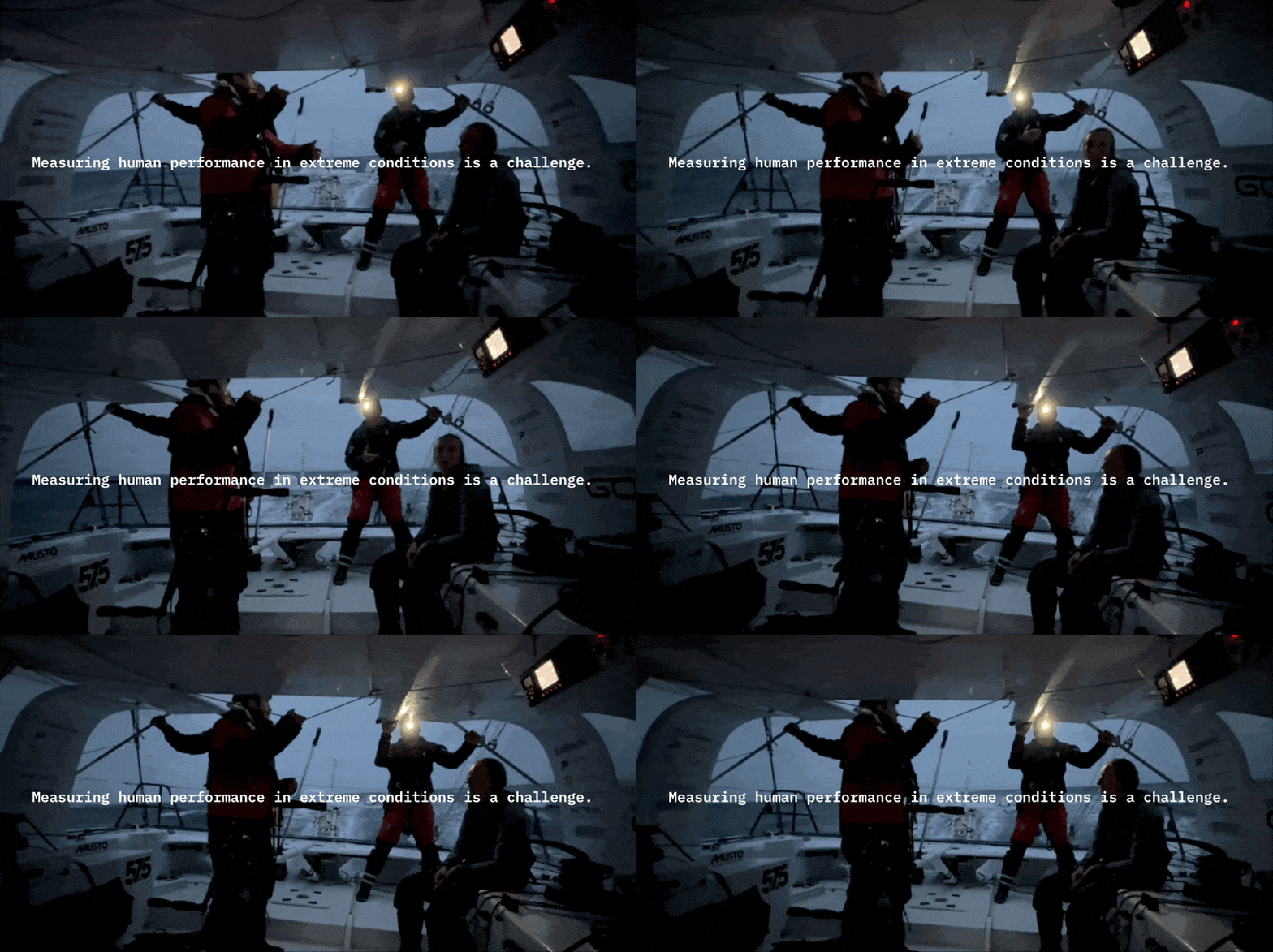
Hatch Systems was founded by Berenice Charrez, a semi-pro sailor with a PhD and postdoc from Berkeley & Harvard who picked offshore sailing as the initial experimentation ground for the technology.
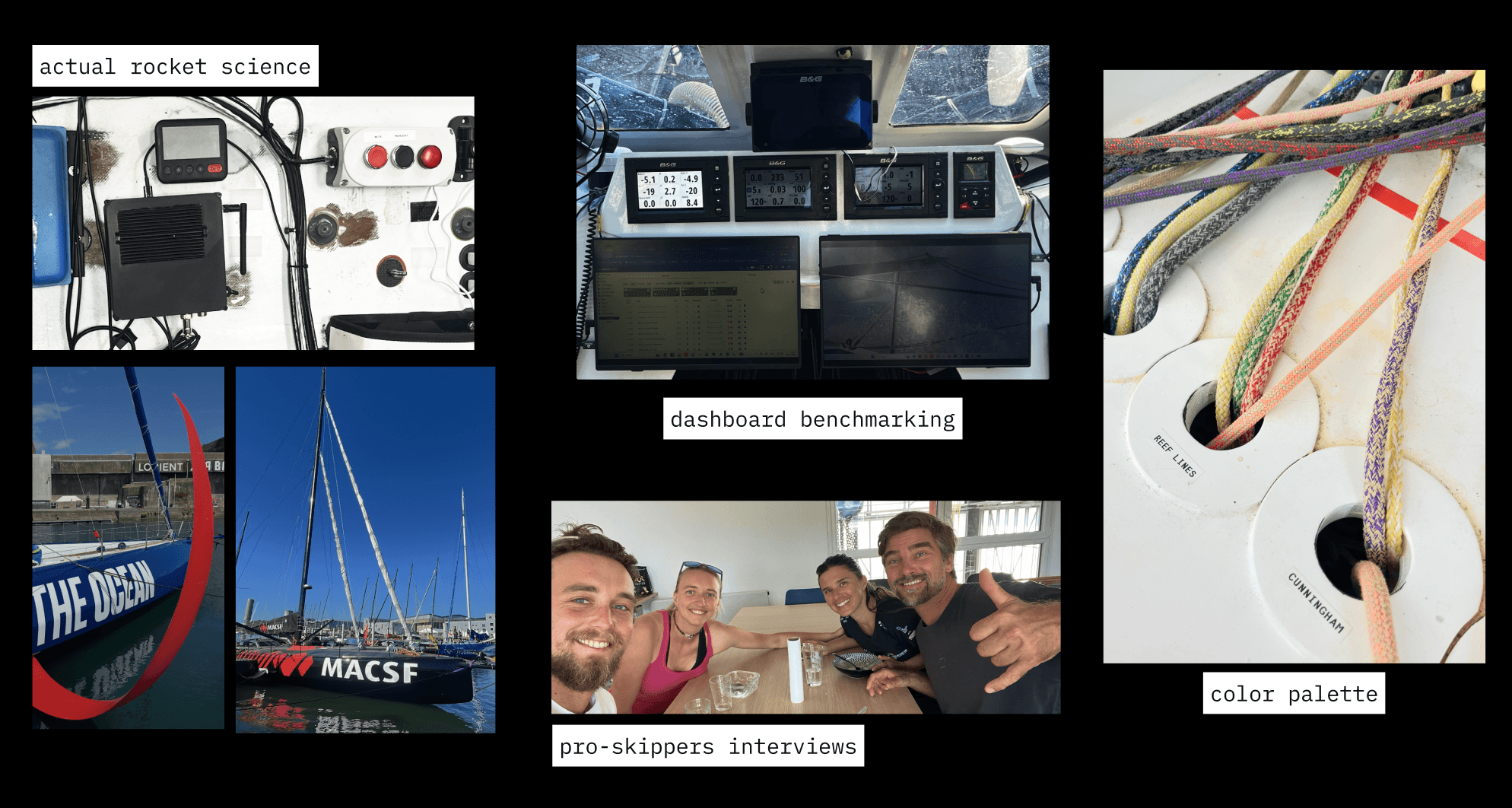
I started by sitting down with professional skippers, athletes who race solo around the world, to understand how they manage sleep and health at sea. They spoke openly about what these races cost their bodies and minds, and those conversations became the heart of the project. From them I mapped their biggest pain points, how they already use wearables like Garmin, and the sleep tactics they rely on to stay sharp.
The challenge was turning dense, technical findings into an interface these sailors could trust and act on with confidence.
The interface had to serve two very different moments. Mid-leg, exhausted and on watch, a sailor might have ten seconds to check in. During a rare calm, they might want to dig into their sleep patterns to stay sharp for the days ahead. In ultra-endurance racing, “to sleep is to win” has become a guiding principle, so both moments mattered.
The harder problem was presenting medical-grade data that felt actionable without causing alarm. My answer was progressive disclosure: a minimal interface with a clear information hierarchy, built for glanceability first and depth on demand. Each layer keeps cognitive load low, so sailors see only what they need, when they need it.
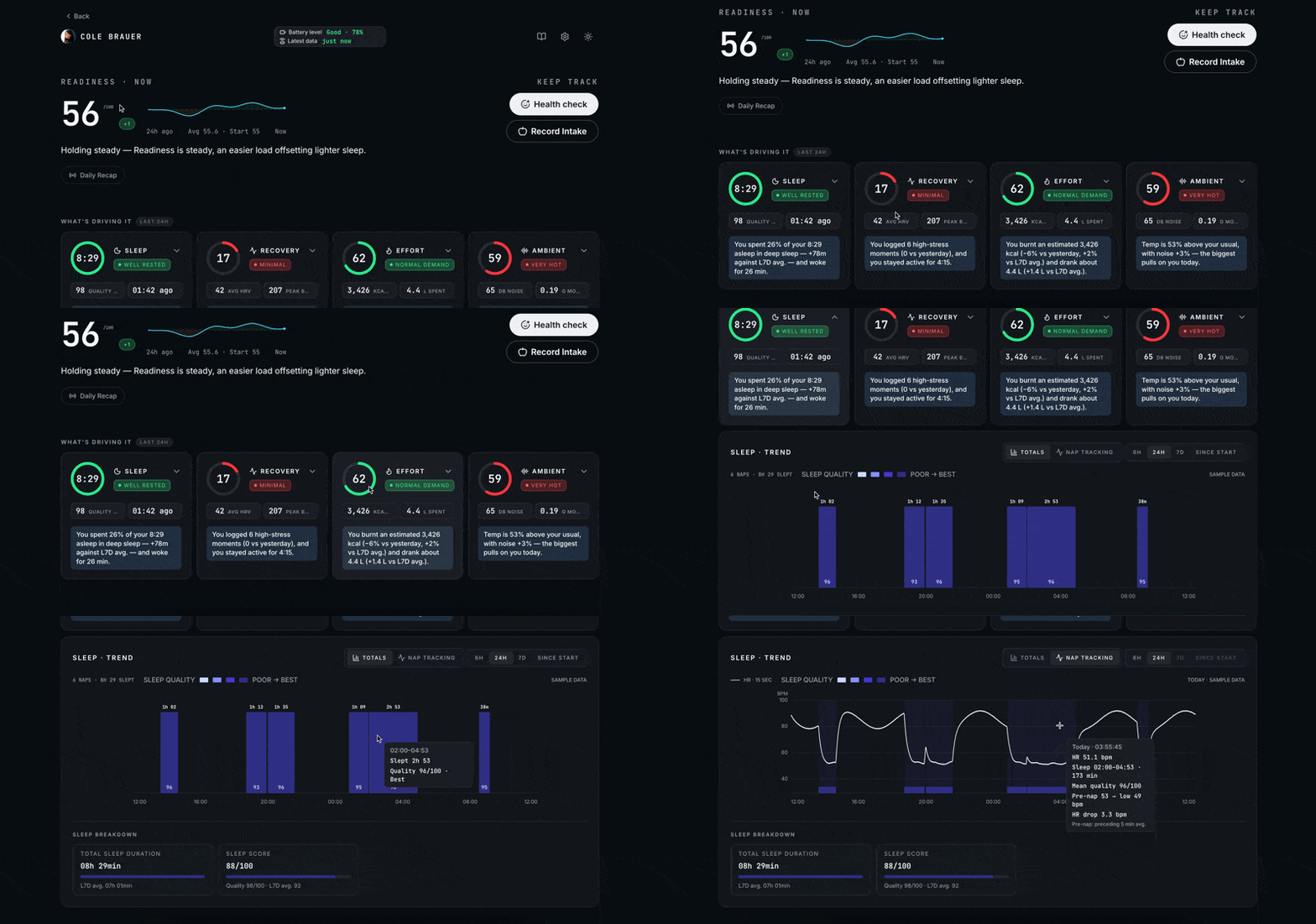
I built the interface in three layers, so sailors can take in as much or as little as the moment allows.
- Level 1: Readiness score. An at-a-glance read on alertness, with trends and the main factors driving it. In ten seconds on deck, this is all a sailor needs.
- Level 2: Four pillar cards. A score for each core aspect of health, each with its own consistent color scale and quick, easy-to-read trends. I deliberately borrowed familiar design patterns from products sailors already use, so Hatch’s unique data felt intuitive from day one.
- Level 3: Expandable panels. A deeper dive into each metric Hatch computes. Every panel was designed around the question a sailor actually brings to it, like “When do I recover best?” or “How much should I eat to make up for today’s calorie burn?” The goal was to stay true to the medical science while making every number meaningful.
Hatch Systems for offshore sailing races goes live at the Route du Rhum transatlantic race in November 2026, with 7 teams using it onboard as a paid product.
Hatch’s underlying technology is expanding into new markets: occupational health professionals and deployed field teams. Hatch uniquely combines measurement of human vitals with monitoring of the surrounding environment, turning that data into health recommendations and real-time early warnings. The ambition is to deploy AI decision support where it matters most: helping prevent injuries and long-term disease, and enabling preventive measures for exposed professionals.
I helped the founder shape the narrative and early go-to-market materials for an upcoming fundraise. The work spanned a strategic deck, one-pagers, messaging, and a new website (launching soon).